Canada produces world-class research with enormous potential for societal and economic impact, yet too many discoveries never move beyond the lab. Postdoctoral researchers are uniquely positioned to bridge this gap but often lack the specialized training, mentorship and resources needed to advance early-stage innovations. Unlocking this potential requires support to explore commercialization opportunities, reduce risk, and identify the right pathway to impact, whether through industry partnerships, venture creation or translational research.
Le Programme Postdoctoral i2I en Commercialisation was designed in partnership with Mitacs to address this critical gap, and equip researchers with the skills, mentorship and support to move promising discoveries toward meaningful societal and economic impact. The program is a national, fully online, 12-month fellowship that supports postdoctoral researchers advancing deep technology and health innovations while they remain embedded in their labs. Co-supervised by their Principal Investigator and an i2I Commercialization Investigator, they divide their time de-risking their innovations, and developing the entrepreneurial mindset and commercialization skills to prepare them to bring their research to impact. Training includes validating value propositions, assessing market opportunities, developing IP strategies and business models, exploring funding options and building a commercialization roadmap.
The goal is to equip researchers to evaluate opportunities and make evidence-based commercialization decisions. Fellows can pursue pathways as translational scientists, industry champions or venture founders, supported by a national network of mentors, commercialization experts, incubators, and accelerators.
“i2I was helpful in how to communicate with investors and define our financial goals…we refined our business plan, and we received foundational knowledge on startups.”
— Dr. Hila Behar, Co-founder & CTO, BryoSphere Biotechnologies | 2024 i2I Commercialization Postdoc Fellow
The program is delivered by the i2I Research & Innovation Institute with support from Conseil de recherches en sciences naturelles et en génie du Canada (CRSNG) and Mitacs.
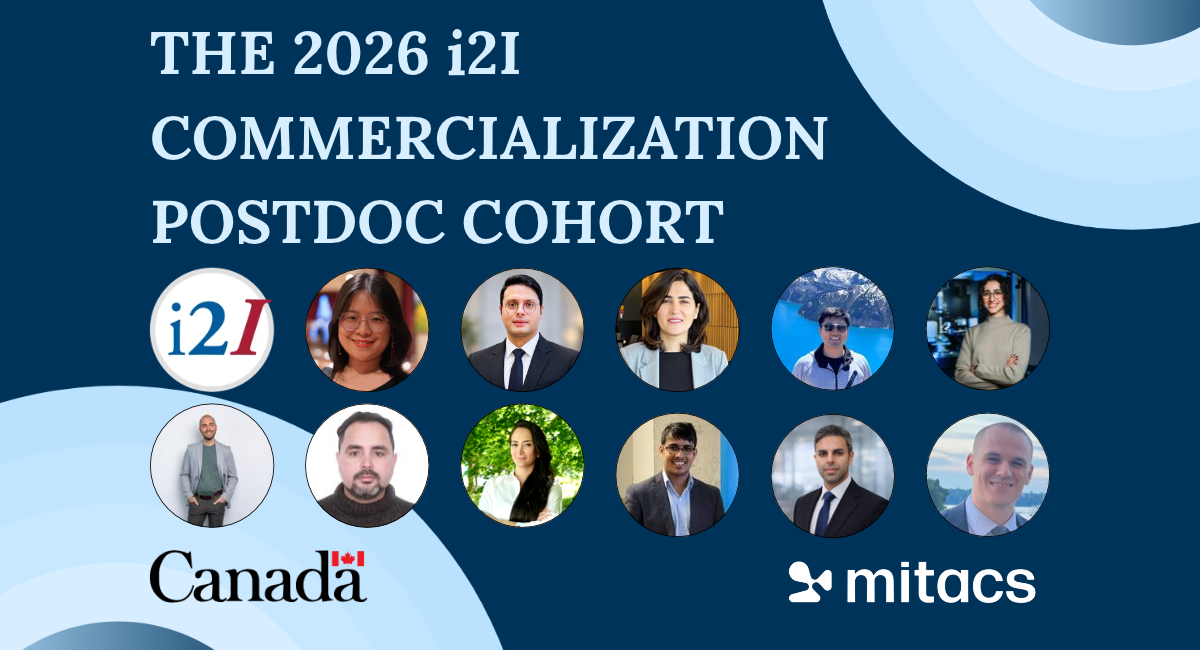
The 2026 i2I Commercialization Postdoc Fellows

Aidan England is a postdoctoral fellow researching sustainable chemical production in Prof. Rachel Baker’s group at Queen’s University in Kingston, Ontario. He completed his BSc and PhD at the University of Guelph with Prof. Marcel Schlaf, where his research focused on catalysis for biomass upgrading. Through i2I, he is developing electrochemical methods for converting bioderived feedstocks to sustainable polymer precursors. The resulting materials are designed to have performance advantages over existing polymers with a smaller environmental footprint.
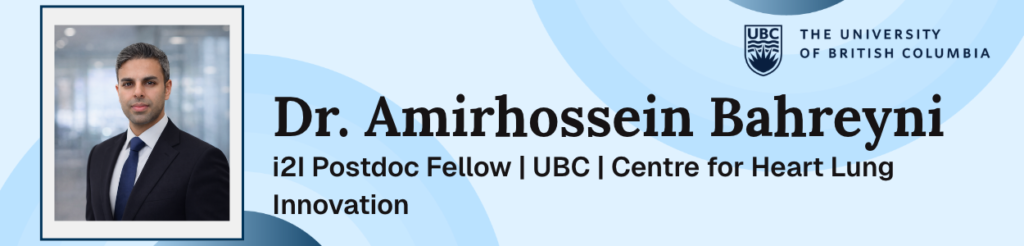
Amirhossein Bahreyni, MSc, PhD, is a postdoctoral fellow at the University of British Columbia, collaborating with Providence Research and the SFU Beedie School of Business. He is translating extracellular vesicle (EV)-based technologies into liquid biopsy solutions for cardiovascular disease, with the potential to enable earlier detection, improve disease monitoring, and support more personalized patient care. Drawing on his expertise in cardiovascular immunology, viral myocarditis, and biomarker discovery, he is advancing the development and validation of EV-based diagnostics through the i2I Commercialization Postdoctoral Program, while building expertise in commercialization and technology translation. His goal is to bridge the gap between biomedical research and meaningful improvements in patient outcomes.

Dr. Azadeh Zandieh is a postdoctoral fellow at UBC whose work combines advanced materials development with sustainability assessment. Her research explores bio-based composites for thermal-management applications. Through the i2I program, she is developing an early-stage decision-support concept to help clean-tech materials teams evaluate cost, performance, and sustainability together before committing to production.
Dr. Devendra Pal is a postdoctoral researcher at McGill University specializing in atmospheric and environmental sciences, advanced optical instrumentation, and AI-enabled particle characterization. His research focuses on technologies to characterize and monitor nano- and microscale particles in air and water, and on their implications for air and water quality, cloud microphysics, and climate. He is advancing AquaHQL, an AI-powered particle-intelligence platform built on patented Nano-Digital In-Line Holographic Microscopy (Nano-DIHM) technology he co-developed. The platform aims to make waterborne particles, including nano/microplastics and metal-containing contaminants, visible, measurable, and actionable through rapid three-dimensional characterization. His work bridges scientific discovery and commercialization, with the goal of making environmental monitoring more accessible and effective.
Eduardo Gonzalez Martinez is a chemist, McMaster University postdoctoral fellow, and emerging entrepreneur specializing in biomaterials and 3D bioprinting. He helps translate laboratory innovations into commercial bioinks, with current work focused on developing GMP-aligned GelMA formulations, evaluating bioink cytocompatibility, and advancing collagen-based bioinks for research applications.

Dr. Guillaume Millette is a scientist passionate about tackling antimicrobial resistance through innovative research and development. Results-driven, analytical, and curious, he excels at bridging the lab benchtop with action. With expertise in antimicrobial derivatives and a commitment to One Health, Dr. Millette communicates complex concepts effectively. He welcome connections from others who want to make a difference together.
Joy Kobti recently completed a PhD in Chemistry & Biochemistry at the University of Windsor, where her research focused on developing new pharmaceutical solid forms to improve drug delivery and high-throughput methods to accelerate their discovery. Through this work, she also helped develop Modular Multiwell Devices (MMDs), a technology designed to make solid-form screening faster and more efficient. As a postdoctoral fellow, she is exploring the commercialization of this technology and its potential applications within the pharmaceutical industry.
Lishen Zhang is an i2I commercialization postdoctoral fellow at Simon Fraser University and Co-Founder of Atop Materials Inc. His work focuses on developing PFAS-free water-repellent coatings as safer alternatives to conventional waterproofing technologies. He is currently working to scale up the technology and bring it closer to commercial applications.

Dr. Masoumeh Bavadi is a Postdoctoral Fellow in Civil Engineering at Memorial University of Newfoundland, specializing in sustainable environmental technologies for oil-spill response. Her research focuses on developing innovative biosurfactant-based dispersants designed to improve oil-spill treatment in challenging estuarine and coastal environments while reducing potential environmental impacts. With a strong background in environmental engineering, including peer-reviewed publications and a patent, she aims to bridge scientific research and practical applications. Through the Invention to Innovation (i2I) Commercialization Postdoc Program, she is exploring pathways to bring her technology from the laboratory to real-world applications.
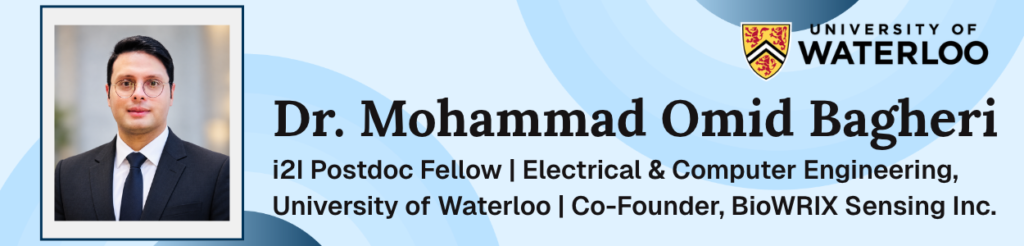
Mohammad Omid Bagheri, Ph.D., is an i2I Commercialization Postdoctoral Fellow at the University of Waterloo and Co-Founder of BioWRIX Sensing Inc., a deep-tech venture developing non-invasive wearable biosensing platforms for health monitoring and multi-biomarker diagnostics. Having earned his Ph.D. in Electrical and Computer Engineering at Waterloo, he brings expertise in RF and microwave engineering, AI-enabled radar sensing, and wearable biomedical systems to the development of next-generation sensing technologies that integrate advanced materials, intelligent signal processing, and scalable hardware design. Through the i2I program, he is translating scientific discoveries into clinically meaningful, accessible, and commercially viable healthcare solutions.

Dr. Yuli Zhang is a biomedical engineer passionate about bringing regenerative medicine from the lab to the market. She is working on commercializing Human Salivary Gland-on-a-Chip that developed in her PhD lab at McGill University. This project aims to accelerate the drug and therapy development process for radiation-induced salivary dysfunctions by providing a human tissue-based preclinical model.
To be featured: Dr. Veena Vijayan | University of Victoria
Want to be a Postdoc Fellow? Join us December 1, 2026
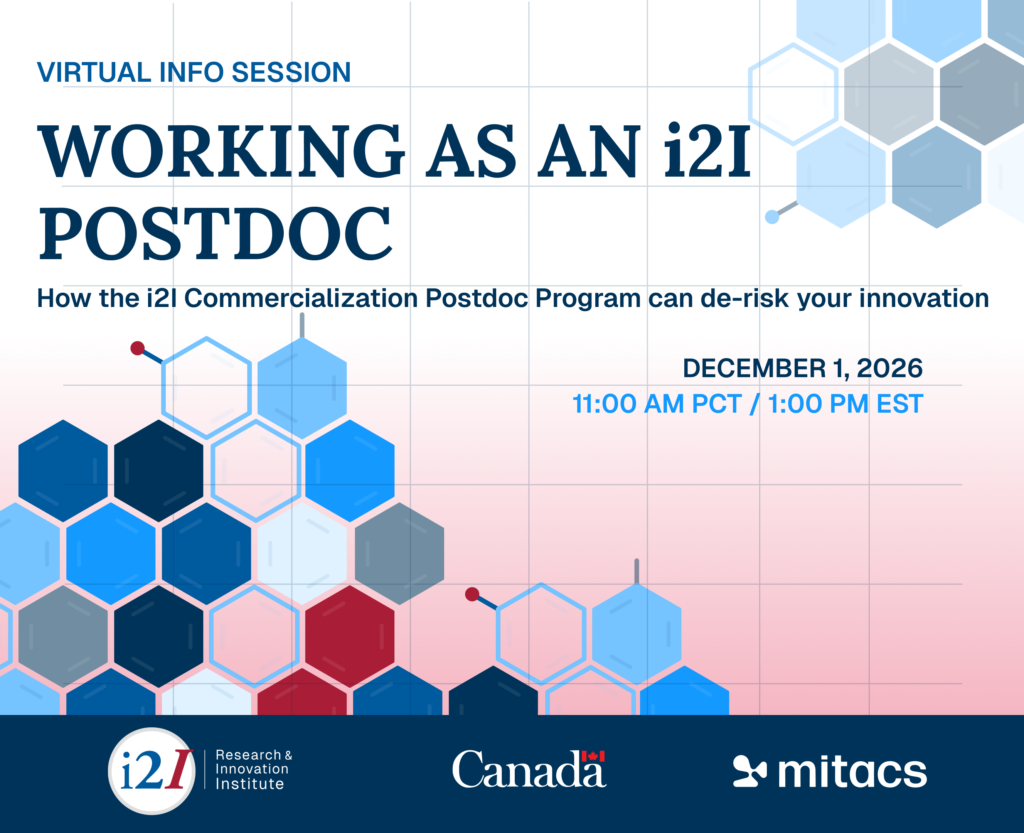
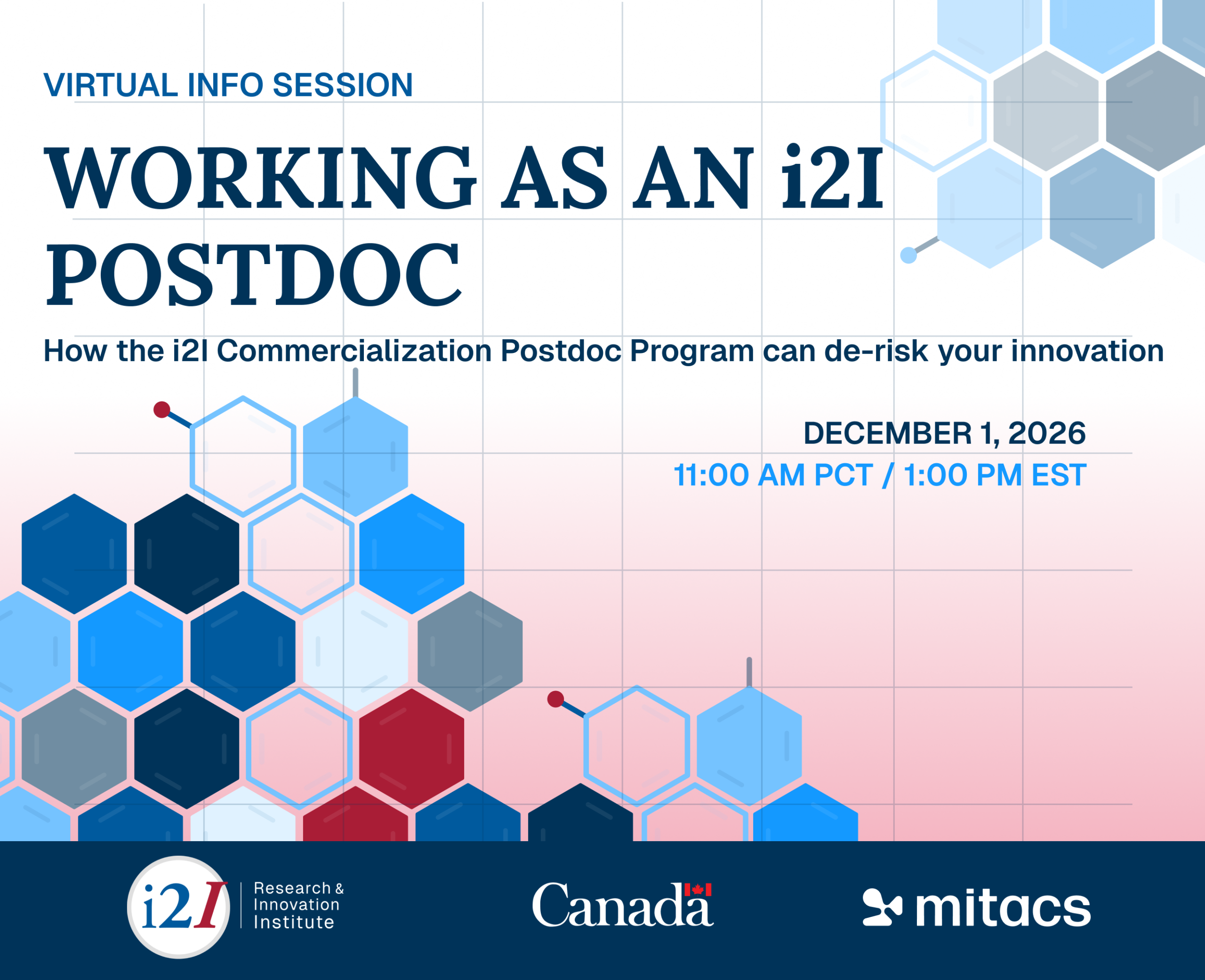
If these fellows have you thinking about your own research, we’d love to meet you. Join us for Working as an i2I Postdoc: Virtual Info Session on December 1, 2026 at 11:00 AM PCT / 1:00 PM EST.
You’ll learn how the fellowship works, what eligibility and the application involve, and how the 50/50 structure plays out in practice. All program fees are covered by NSERC and Mitacs, and eligible fellows receive a $60,000/year stipend. Applications for the 2027 program open November 18, 2026, and the program starts September 7, 2027.